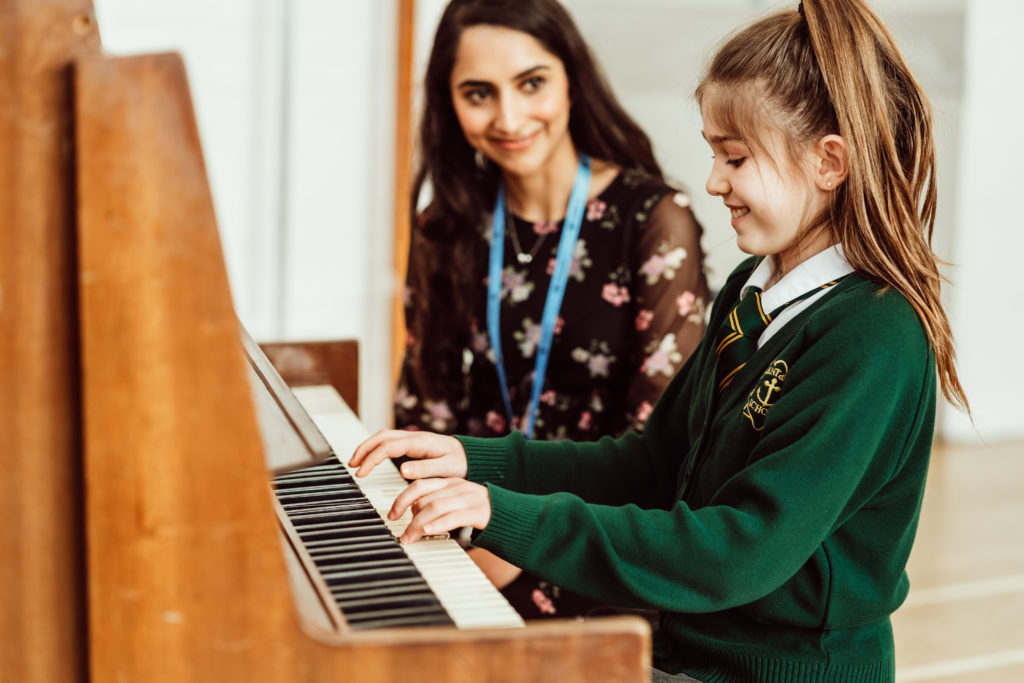
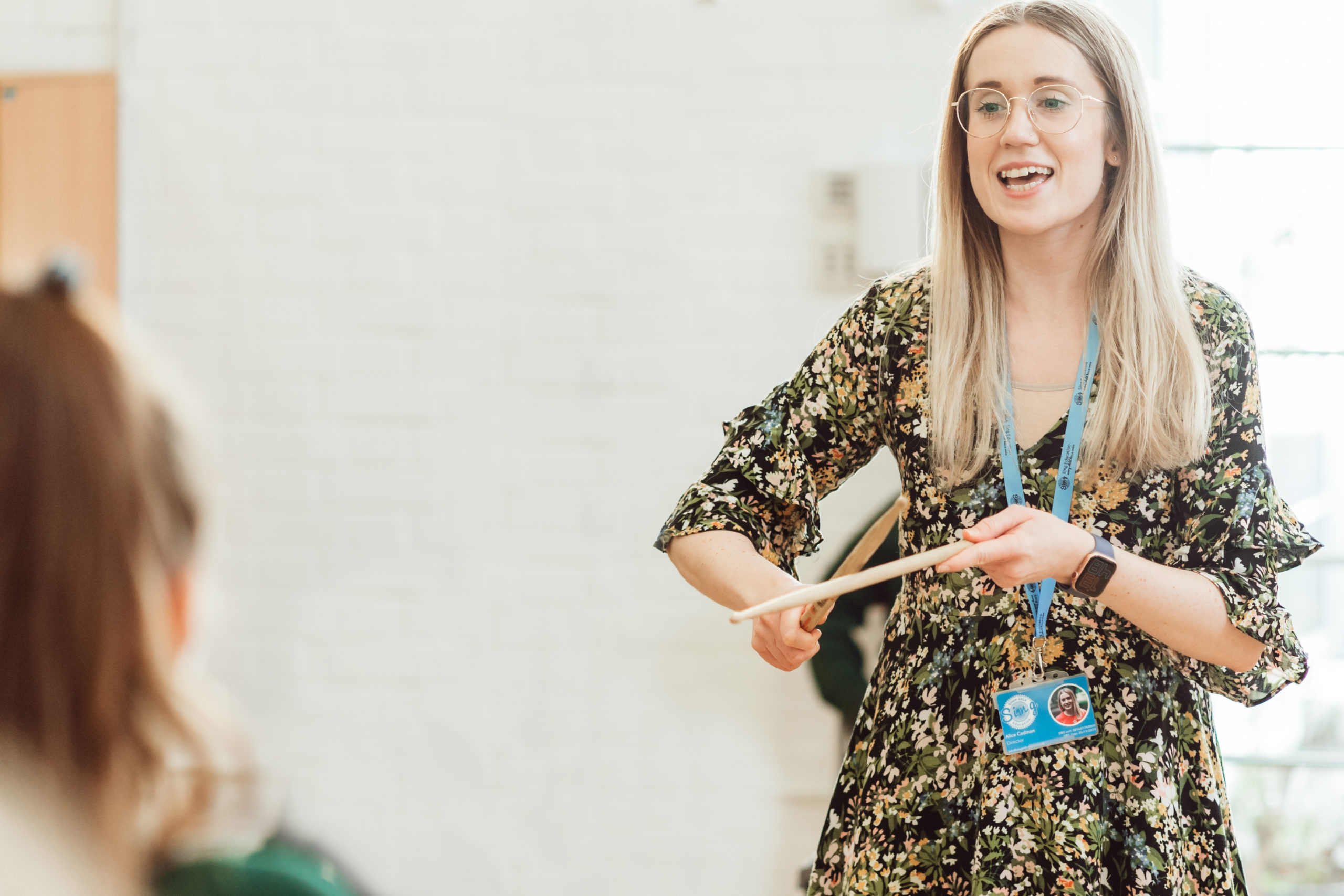
It might be one-to-one tuition or small group learning – but whatever the format, instrumental music lessons are an important part of music education. Sing Education offers a number of instruments such as guitar, recorder and keyboard. Moreover, we ensure instrumental lessons are joined up seamlessly with our curricular teaching.
By working with Sing Education, schools have the opportunity to provide both curricular and instrumental tuition. The latter is funded privately by parents and provides young learners with the chance to round out their music making and musical skills building in either small-group settings or through one-to-one lessons.
Typically lasting 30 minutes, sessions cover a variety of instrumental and musicianship skills and are designed to join up seamlessly with the broader curricular music provision.
However, if as an instrumental teacher you bring bespoke teaching resources or methodologies, we work closely together with you to incorporate them into the Sing Education classroom Schemes of Work. We do this so that children feel their musical learning is well joined up and so they understand that what they’re learning in an instrumental lesson is linked to what they’re learning in their curriculum music lesson.
In terms of instruments, we offer a variety of percussive, string and wind tuition choices. These currently include ukelele, keyboard, violin, flute, recorder, guitar and singing. Each school has a tailored offering which allows them to provide a cohesive , well-rounded music programme, as well as to be able to structure appropriate learner progression within their instrumental offering.
As a Sing Education instrumental teacher, you typically teach a variety of instruments within your own specialism(s). However, depending on the school, timetable and interest, you may be teaching your primary instrument, as well as one or two secondary instruments such as keyboard or ukulele or recorder to round out the provision.
Curricular
Extracurricular
Inclusion
Instrumental
Provision
People
Resources
about the author
Alice Cadman
Alice is our Director of Education. Alice oversees the education team, ensuring that all of our teachers are well resourced with a rich and dynamic curriculum, and are well trained and supported in their roles. Alice also oversees staff wellbeing and all of our music enrichment activities.
Alice Cadman
Alice is our Director of Education. Alice oversees the education team, ensuring that all of our teachers are well resourced with a rich and dynamic curriculum, and are well trained and supported in their roles. Alice also oversees staff wellbeing and all of our music enrichment activities.
Articles by this Author
Teaching with Sing Education
Sing Education offers music graduates employment with training and teaching resources, enabling children to encounter the transformative power of music within primary schools.
Empowering Educators, Inspiring Students: A Decade of Change in Music Education
Over the last decade, music education in England has seen significant shifts, both in the curriculum and in teacher training, responding to changes in government policy, the introduction of new standards, and a strong demand for accessible, high-quality music instruction in schools.
Music Education Spotlight: Victoria Road Primary School
“A bright and promising future, with expanded opportunities for students to explore and excel in music.”
Learn how Victoria Road headteacher Kelly Collens and the team at Sing Education put curiosity, learning and growth at the centre of the school’s strategy to achieve high-quality music education in Kent.